
ARCTICenter at the AAG 2026 Annual Meeting, San Francisco
March 25, 2026

March 17–21, 2026
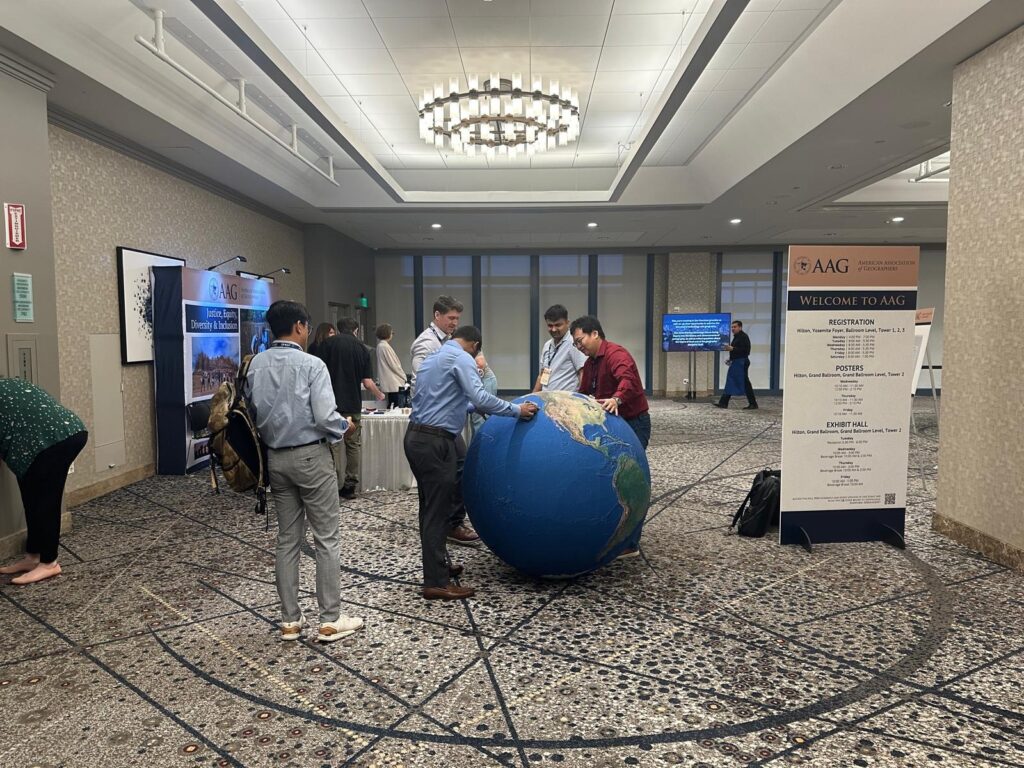 | 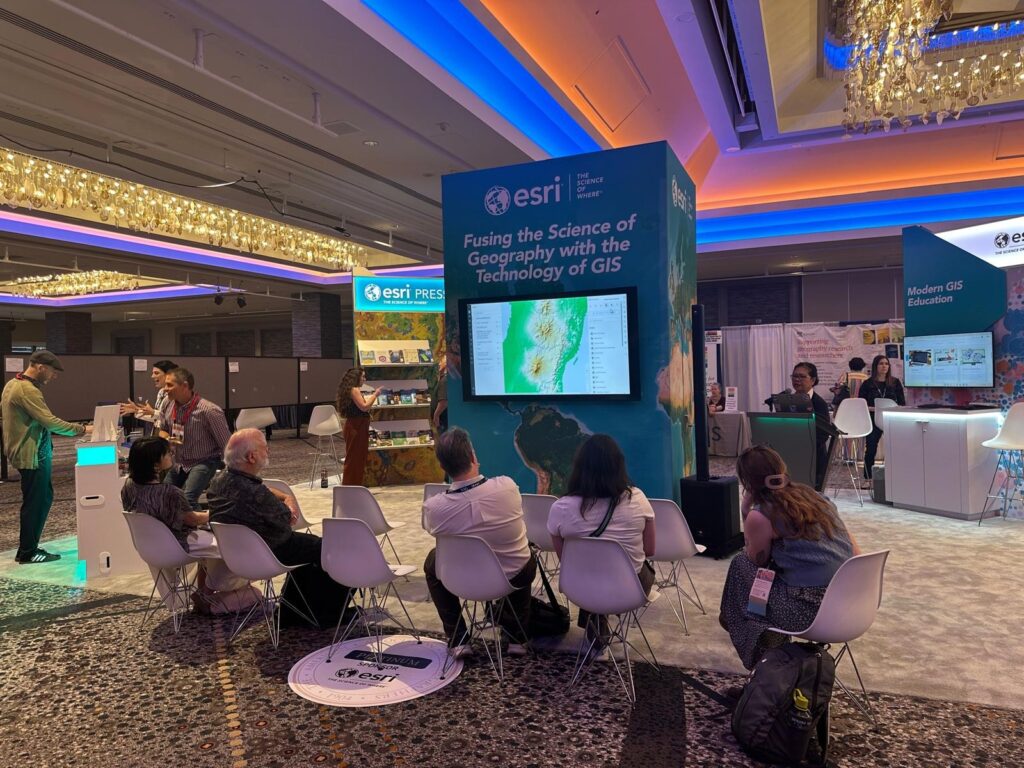 |  |
The ARCTICenter team participated in the 2026 Annual Meeting of the American Association of Geographers (AAG), held March 17–21 at the Hilton Union Square in San Francisco, California. This year’s meeting focused on the interplay of technology and geography, AAG, drawing thousands of researchers, policymakers, and practitioners from over 60 countries.
The AAG Annual Meeting is the largest international gathering of geographers and spatial scientists, offering a platform for presenting research, engaging in interdisciplinary exchange, and exploring emerging approaches and technologies across the geographic disciplines.
The ARCTICenter team presented recent research progress, gathered valuable input from leading experts in Arctic studies, and established new collaborative connections that will inform the project’s next steps at the intersection of arts, science, and Indigenous knowledge around ice, snow, and permafrost.
The ARCTICenter team used the conference as an opportunity to gather input from leading experts and establish new collaborative connections that will inform the project’s ongoing work at the intersection of arts, science, and Indigenous knowledge around ice, snow, and permafrost.

Frozen Commons at AAG Annual Meeting 2026: What We Shared
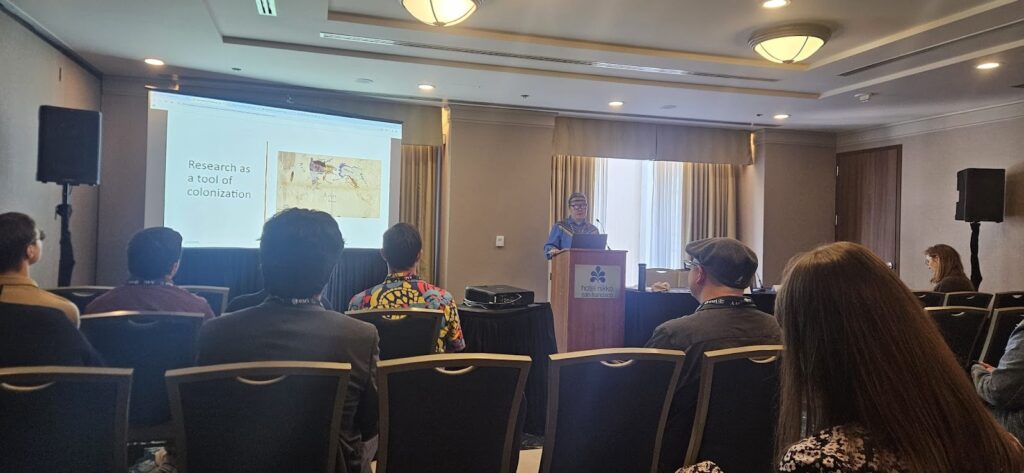
Stanislav Ksenofontov joined the Polar Geography Specialty Group session on March 18th, where he presented a paper on pathways to decolonize science-appropriated Indigenous terminologies in Arctic research. The paper addresses the critical need to recognize and restore Indigenous authorship of concepts and terms that have been absorbed into scientific discourse without adequate attribution or contextual integrity.
Stanislav also participated in a mentoring session for early-career scholars, offering guidance on navigating career paths in geography, securing research grants, and maintaining work-life balance in academia.
 |
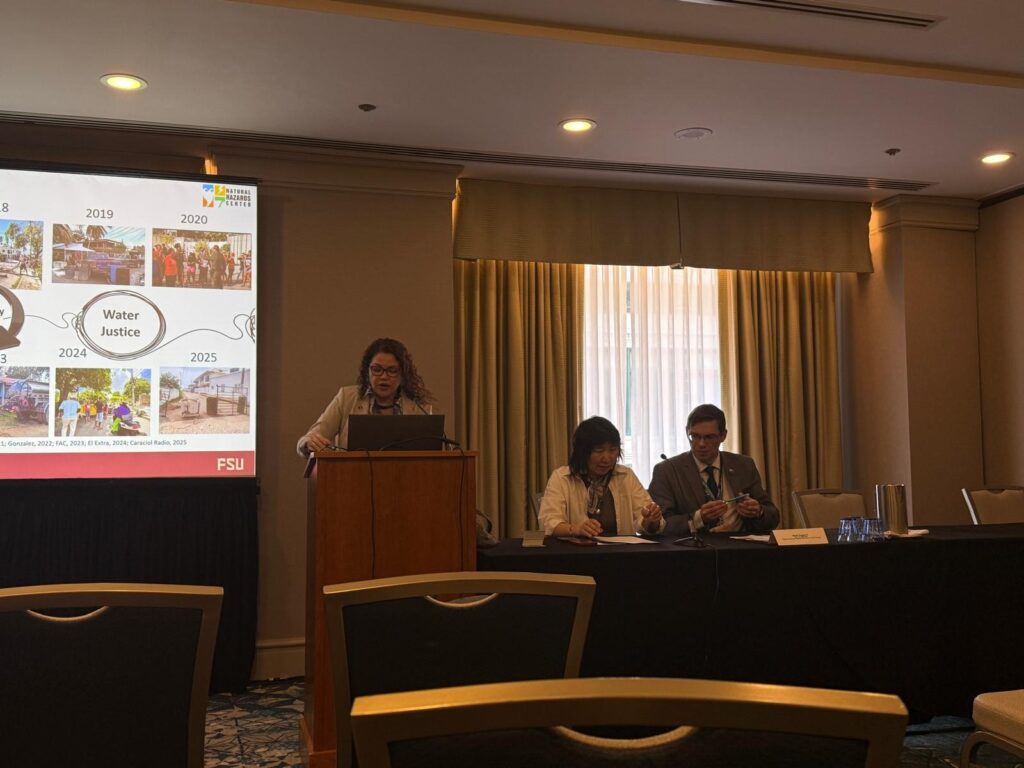
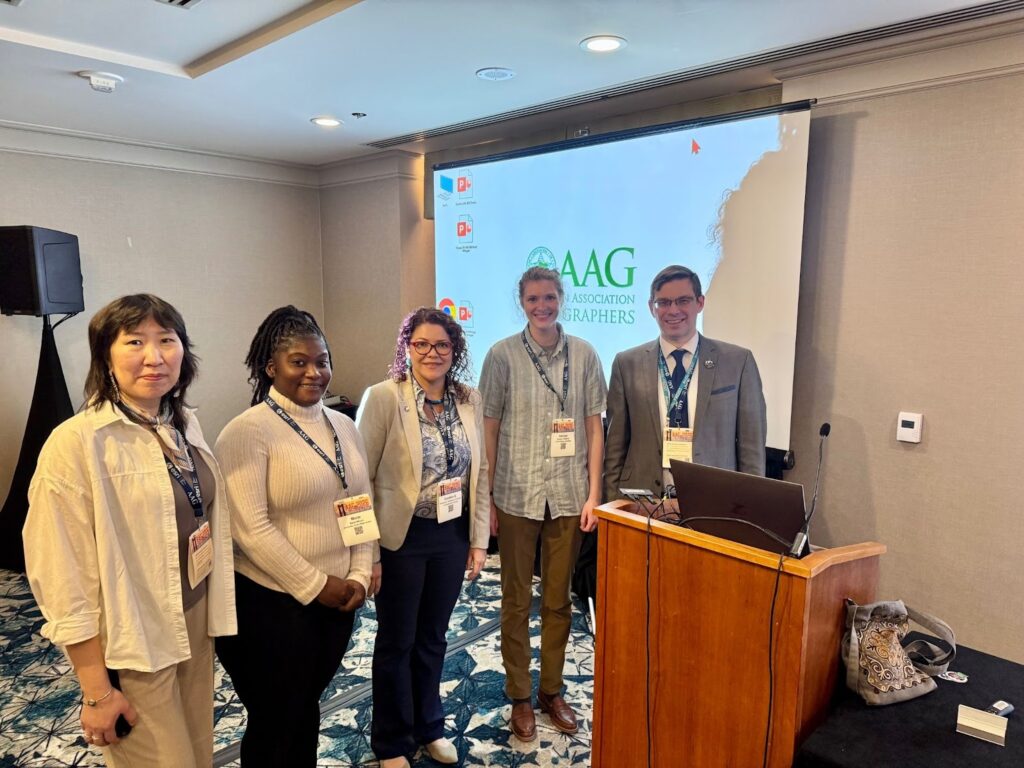
On the same day, Mariia Kuklina and Andrey Petrov organized a panel session titled Promoting Community Environmental Knowledge Sharing via Traditional Ways and Digital Technologies. The panel explored how co-creation of knowledge between Western scientists and Indigenous communities has become integral to research across disciplines and regions — spanning study design, data collection, documentation, analysis, and dissemination. Of particular interest was the role of visual, aural, and experiential methods in conveying environmental change: from traditional forms such as performance, ceremony, storytelling, and games to digital technologies including art, photography, and filmmaking, as well as hybrid approaches like photovoice. The session emphasized that sharing co-produced and Indigenous knowledge with broader audiences — government agencies, stakeholders, other communities — expands the diversity and reach of knowledge exchange.
 |  |
Harriet Morkor Quarshie. Presentation: Active Wildfire Severity and Spatio-Temporal Trends (2001 -2025) in the Selenge river basin,Mongolia.
Attending the American Association of Geographers (AAG) Annual Conference in San Francisco was a rewarding experience, made possible through the support of the Arctic, Cold and Remote Territories Interdisciplinary Center (ARCTICenter).
At the conference, I presented my research titled “Active Wildfire Severity and Spatio-Temporal Trends (2001–2025) in the Selenge River Basin, Mongolia.” Sharing my work with an international audience provided valuable feedback and new perspectives that will help strengthen my ongoing research.
In addition to presenting, I was honored to receive an honor award in the Landscape Specialty Group Photography Contest, which made the experience even more meaningful.
Beyond these achievements, the conference offered excellent opportunities for networking, allowing me to connect with scholars and professionals working on related topics, particularly in cold and remote environments.
Overall, attending the AAG conference deepened my understanding of current research trends, expanded my academic network. I am sincerely grateful to the ARCTICenter for their support in making this opportunities possible.
 |  |
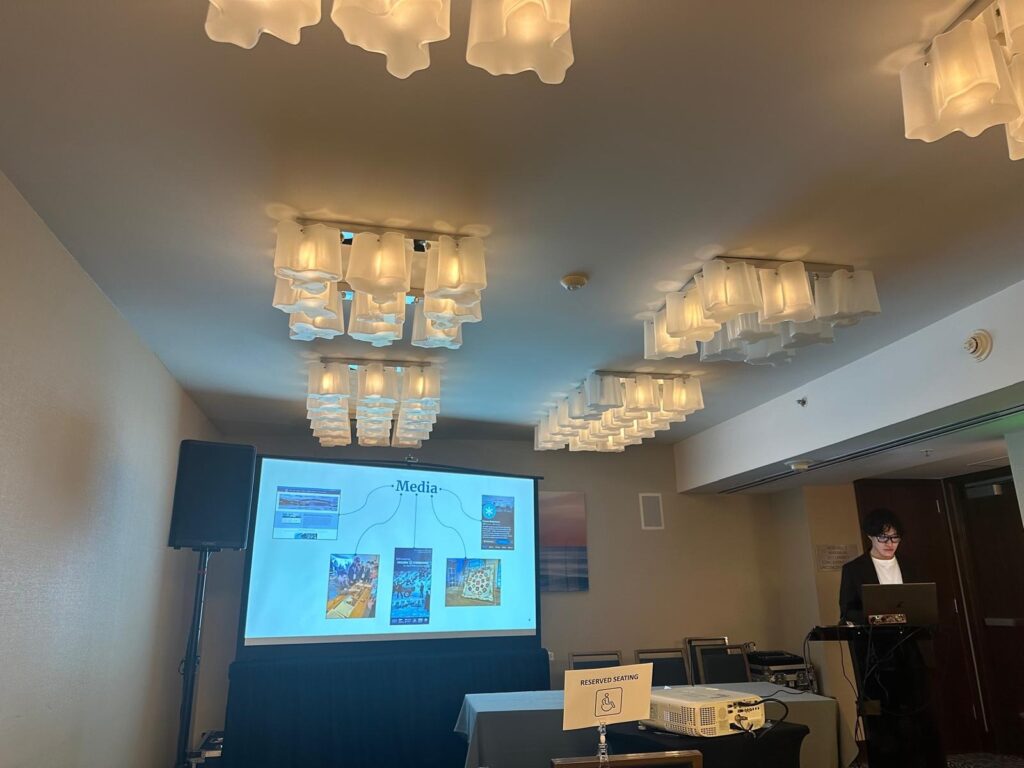
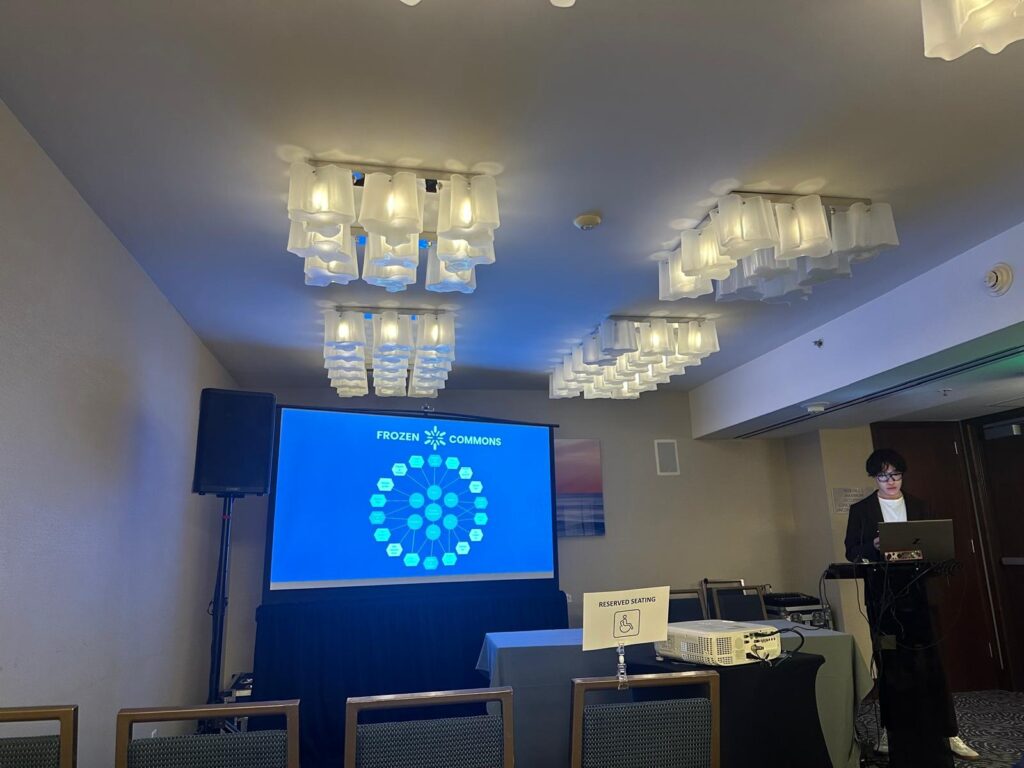
Denis Dabaev joined the session Media Geography 2: Outreach and Connection on March 20th, where he presented on the use of diverse media formats to support knowledge exchange within the Frozen Commons project. His talk examined how research circulates across different contexts and how it can remain both accessible and responsible in the process.
 |  |
 |  |  |